
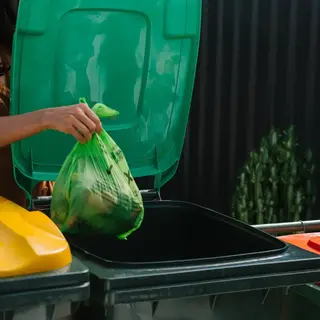
Did you know that almost 50% of what we put into our red bin is organic waste, such as food scraps and garden clippings? Since its introduction on 30 June 2025, FOGO has become a part of everyday life in the City of Rockingham, helping our community recycle more and reduce waste to landfill.
FOGO (Food Organics, Garden Organics) builds on our three‑bin system, making it easier for everyone to play their part by placing food scraps and garden waste together in the green‑lidded bin for weekly collection.
By working together, our community is making a positive difference. Organic waste is now being turned into valuable compost, soil conditioner and mulch for reuse.
Our move to FOGO is part of a broader regional effort, with councils across Perth and Peel transitioning towards the same goal by 2030.
Under FOGO your green-lidded FOGO bin is collected weekly, your red-lidded general waste bin and yellow-lidded recycling bin are collected fortnightly.
What to put in each bin
Annual Caddy Liner Allocation
FOGO compostable caddy liners are now available for collection for City of Rockingham households currently using the FOGO service.
Each FOGO household can collect two rolls of 75 liners each financial year. Just bring ID showing proof of address and collect yours from the:
- Millar Road Landfill Facility
- Administration Building
- Any City of Rockingham Libraries
While food scraps can be placed loosely in your caddy, the liners are compostable, worm safe, contain no micro‑plastics and are made from GMO‑free corn. They support a cleaner bin, a greener City and a waste-wise community that keeps food waste out of landfill.
Compostable liners are worm safe, contain no micro‑plastics and are made from GMO‑free corn and other compostable materials. They support a cleaner bin, a greener City and a waste-wise community that keeps food waste out of landfill.
Food scraps can also be placed loosely in the kitchen caddy or green-lidded bin as a free FOGO alternative.
All households on the FOGO waste collection service are eligible to collect two rolls of caddy liners. If you live in a multi-unit dwelling like an apartment and you are unsure if you are on the FOGO service, please contact our Customer Support team by calling 9528 0333 to check.
Yes, if they provide ID showing the household address.
An 8L capacity will fit the City of Rockingham supplied kitchen caddy.
Replacement compostable liners must meet AS4736 standards and are available at most major retailers. Make sure you look for the Australian Standard logo. An 8L capacity will fit the City of Rockingham supplied kitchen caddy.
Each FOGO household can collect two rolls of 75 compostable caddy liners per year with proof of address. To make sure all residents have fair access, we track collections by address, so we’re not able to provide additional rolls once they’ve been collected.
If you need more liners, suitable compostable liners that meet Australian Standard AS4736 are available for purchase from most major retailers. Alternatively, you can purchase a FOGO Kit's from Millar Road Landfill Facility admin office that includes a kitchen caddy, two rolls of 75 compostable caddy liners and a guide on how to FOGO like a pro.
You can also place food scraps loosely in your kitchen caddy and green-lidded bin.
Frequently Asked Questions
FOGO stands for Food Organics, Garden Organics and is a waste collection and processing service. Under the FOGO service you will be able to add food waste along with garden waste to your green-lidded bin for kerbside collection. The contents of a FOGO bin can be turned into compost, mulch and soil conditioner, diverting materials from landfill.
If you live in a large household, you may be eligible for an additional 140L red-lidded general waste bin at a concessional rate.
Households with five or more permanent residents can apply for a second 140L red‑lidded general waste bin at a reduced annual fee of $80.70 (excluding GST) for 2026/2027, replacing the previous concession of $128 (excluding GST) for households of seven or more.
Complete the form Application for Concessional General Waste Bin Due to Number of Occupants Residing at Residential Property and Statutory Declaration found in the related documents section below and return it to the City for assessment.
Most bin odours come from food and organic waste, that’s why we will be increasing your green bin collection to weekly. If you’re worried about your general waste bin smelling on the new fortnightly collection program, here’s some tips to keep the smell away:
- Store it in a shady, well ventilated area if possible.
- Make sure your bin lid closes properly and there are no cracks in the bin sides.
- Consider using odour neutralising products in your bin, such as bicarbonate of soda.
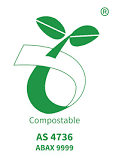
FOGO compostable caddy liners are now available for collection for City of Rockingham households currently using the FOGO service. Eligible households can collect two rolls of 75 liners annually with proof of address from:
- Millar Road Landfill Facility
- City of Rockingham Administration Building
- City of Rockingham Libraries
If you would prefer to purchase your own, or need more than your allocation replacement compostable liners must meet AS4736 and are available at most major retailers. Make sure you look for the Australian Standard logo.
Nappies still need to go in the red general waste bin. As this will now be getting collected fortnightly here’s some tips to reduce the odour from nappies:
- Wrap the nappy into itself using the tabs.
- Seal nappies tightly in plastic bags (you can use scented bags) before placing in the garbage bin.
- It's not always practical, but where possible, tip the contents of the nappy down the toilet before putting it in your bin.
- To support our residents in moving away from single use nappies, we have developed a Sustainable Parenting Program that provides our eligible residents with cloth nappy and menstrual product subsidies.
- Reusable cloth nappies are a great option. Whether using them part-time or full-time, they can save space in your red bin and reduce the odours, their also great for the environment!
If you are already registered for medical waste, your weekly collection service will remain unchanged.
If you, or someone you live with has a medical condition that generates more waste than usual, you can complete an application for an additional 140L red-lidded general waste bin. This form needs a declaration from your medical practitioner and if you qualify, the additional bin will be provided at no cost.
Visit Form - Walk In Service or Additional Bin for Medical Reasons to download the application form, then return it to the City of assessment.
Yes, an additional annual fee will apply for residents who want an extra red bin. It’s currently $269 per annum as at 2026/2027.
Larger families of five or more permanent residents may be eligible for a second general waste bin at a reduced annual fee. Terms and conditions apply. Head to the Bin collection page to find out more.
Flies and maggots are attracted to protein that you may be putting into your bins. Certain times of the year are subject to an influx of flies due to environmental facts such as: rain, humidity and increases in temperature.
Here’s some tips to try and avoid getting maggots in your kerbside bins.
For all kerbside bins:
- Ensure your bin lids close completely. If the bin or lid is cracked or broken, please call the City on 9528 0333 to arrange for replacement or repair.
- If possible, store bins in the shade in a well-ventilated area.
- Clean your bins regularly using warm water and mild soap.
- Line the outer rim of your bins with salt or vinegar.
- Minimise smells by sprinkling your bin with vinegar or baking soda.
- Cover the maggots with lime, vinegar or boiling water.
- Spray the top and inside of your bin with vinegar or citronella.
For your FOGO bin:
- Make sure your kitchen caddy lid is closed properly when not in use so that it’s airtight - the handle is designed to lock the lid in place when closed.
- Drain as much liquid as possible from your kitchen caddy before putting it into your FOGO bin.
- Freeze meat, fruit and vegetables, and put them in your FOGO bin the night before collection.
- If possible, cover over food waste with garden waste.
For your General Waste bin:
- Wrap nappies and menstrual products in sealed bags, prior to placing in your general waste bin.
- Wrap the nappy into itself using the tabs.
- Ensure animal waste is in sealed bags, prior to placing in your general waste bin.
- Where possible, tip the contents of nappies down the toilet before putting them in your bin.
- Rinse any meat trays/packaging before putting them in your bin.
For your Recycling bin:
- Ensure all items are rinsed or free of organic material.
There are a number of parasites and harmful bacteria in dog poo / animal droppings that can survive the composting process. Using compost that has dog poo content is considered a health risk when used in a food garden.
If you do not have a green-lidded bin at your property, please contact us to arrange delivery of one on 9528 0333 or email customer@rockingham.wa.gov.au
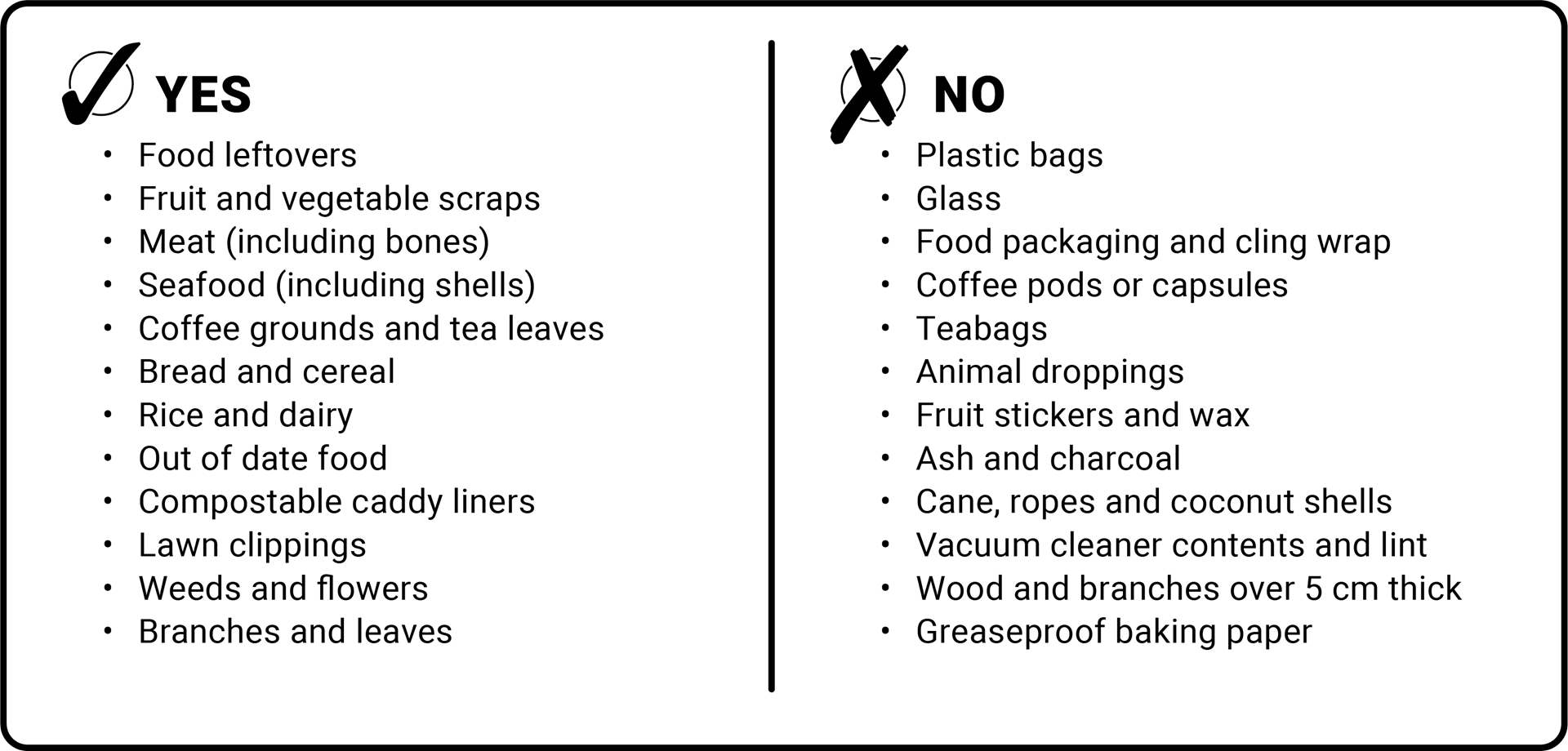
Here's some things that can go into your FOGO bin, you can also check out our Bin Collection page.
Using your kitchen caddy is as simple as 1, 2, 3.
- If you are using a compostable liner, place it inside the caddy.
- Put your food scraps into the caddy.
- When the caddy is full, empty the contents - including the compostable liner if you used one - into the green lidded FOGO bin.
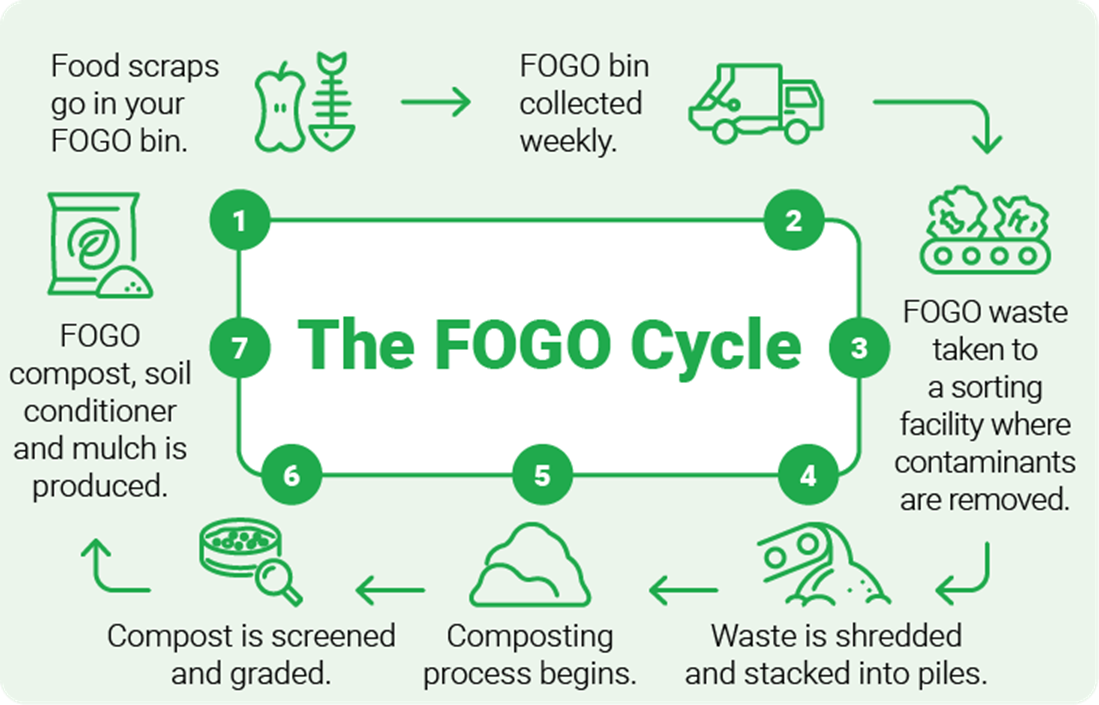
Your FOGO waste is collected by the City's contactor, Veolia. It is taken to a sorting facility in Bibra Lake where it is hand sorted to remove contaminants before it is transported to their facility in North Bannister. There it undergoes the composting process including shredding and screening. The end product is a soil conditioner called Vitagro which is available for purchase from various landscape and garden supply retailers.
Making the most of your FOGO bin means you put less in your general waste bin.
If you're sorting your waste correctly, all your food organics should now be going in the FOGO bin which will be collected weekly.
The City’s domestic waste charge is the Standard FOGO Waste Service on your Rates Notice. This is a compulsory waste service charge applied to all residential properties which receive a FOGO service and is $500 for 2026/2027.
The charge for providing a waste service includes a number of components. This includes provision of four tip passes, two green waste verge and one bulk waste verge collections per annum and a weekly waste collection service. It also covers those costs that are not directly tied to waste collection frequency. This includes maintaining infrastructure and operating systems, providing customer support and meeting environmental compliance and State Government landfill levy charges.
While the frequency of red bin collections has reduced, green bin collections (now a FOGO service) have increased.
Landfills are anaerobic environments, meaning they don’t contain oxygen. When food and organic waste starts to break down in landfill, methane gas is produced and the organic waste doesn’t decompose fully.
The FOGO program diverts a significant percentage of waste from entering our landfill, repurposing it into compost, soil conditioner and mulch, and overall reducing the harmful environmental impacts of general waste.
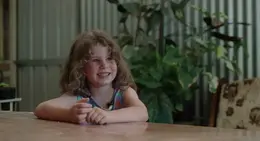
Meet a Waste-Smart Rockingham Family
Meet the Rockingham family of 8, actively sorting their waste, and reducing the amount of waste they are sending to landfill.

Koorana Primary School and Education Support Centre Sustainability Program
While FOGO is helping reduce waste at home, Koorana Primary School and Education Support Centre in Warnbro are also doing their part, learning hands-on ways to sort their waste.
