
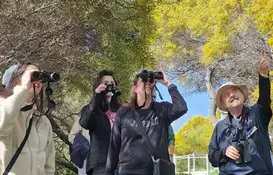
Birdlife WA Walk
- Wednesday 23 September and Saturday 24 October
- Lake Richmond
Learn about the environmental and sustainability programs the City and our partners organise throughout the year and how to get involved.
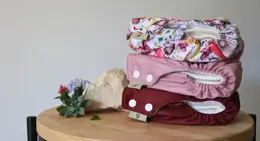
As part of our pledge for sustainability, we endeavour to support our community so we partnered with an external provider to deliver subsidies on reusable nappies and menstrual products for our residents. Our cloth nappy and menstrual product subsidies offered financial support to residents choosing sustainable alternatives to disposable nappies and sanitary products, significantly reducing landfill waste.
Our current cloth nappy and menstrual product subsidies are open until July 2027.
For more information on the program contact the City's Environmental Education Officer on 9528 0333 or customer@rockingham.wa.gov.au
Did you know that it can take over 400 years for a single-use nappy or a menstrual product to break down? Or that disposable nappies use more energy and more land resources in their production and generate 20 times more solid waste than the reusable alternatives?
With millions of these disposable products ending up in landfills in Australia each year, these statistics underline the crucial need to move towards more sustainable practices.
Reusable products have a much lower environmental impact than disposable options. Contributing to reduced waste to landfill and lower greenhouse gas emissions, reusable options are gentle on the planet and more cost effective for you in the long run.
Price comparison
Item | Average unit cost | No. of uses | Cost per use |
|---|---|---|---|
Tampon | $0.50 | 1 | $0.50 |
Disposable pad | $0.40 | 1 | $0.40 |
Reusable pad | $23.00 | 100 + | $0.23 |
Disposable nappy | $0.20 | 1 | $0.20 |
Reusable cloth nappy | $25.00 | 400 + | $0.06 |
Until July 2027, the City is offering Rockingham residents subsidised cloth nappy and menstrual products.
Those that attend an in-person workshop are eligible to claim a free cloth nappy pack, inclusive of:
Find upcoming workshops in the Events section below.
The City is currently offering a $25 off on 4 bamboo reusable cloth menstrual pads.
There are 4 different handy sizes to choose from. To claim you’ll need to upload proof of residency, such as a driver’s licence or a utility bill showing your name and address.
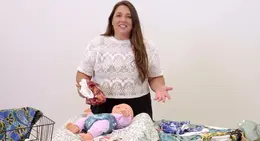
Presented by Sara from Earthside Eco Bums, these interactive, hands on workshops are a great start to ditching the disposables. Plus every participant will be able to claim a free cloth nappy pack.
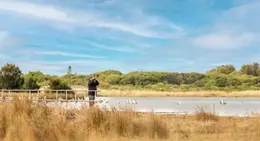
Step outside and explore the distinctive ecosystems of Rockingham’s nature reserves. Join us and our partners on guided walks to spot beautiful birds, delicate insects, rare orchids, fantastic fungi, and more.
Discover what makes our local reserves so special and how you can help protect them. Events take place throughout the year across different reserves, offering new ways to experience our natural places.
Grab your hat and switch on your curiosity. You will be amazed at what is right on your doorstep.
Join us on one of our upcoming guided walks within the reserves of City of Rockingham.
The City of Rockingham is situated within the unique biogeographic region of south-western Australia, which is recognised as one of the thirty global biodiversity hotspots. Areas of regional significance are subject to formal national or state protection mechanisms including; State Conservation Estate, Bush Foreveropens in a new windowopens in a new windowopens in a new windowopens in a new windowopens in a new windowopens in a new windowopens in a new windowopens in a new window sites and Metropolitan Region Scheme (MRS) Parks and Reserves.
Bush Forever Sites seek to protect regionally significant areas of bushland and wetlands on the Swan Coastal Plain.
A large proportion of the City’s natural capital forms part of the Rockingham Lakes Regional Parkopens in a new windowopens in a new windowopens in a new windowopens in a new windowopens in a new windowopens in a new windowopens in a new windowopens in a new window. These reserves are a vital component of the City’s natural capital, underpinning its identity, prosperity and lifestyle. They encompass a variety of landforms and ecosystems throughout the City’s coastal, wetland and bushland environments and support a diverse assemblage of native flora and fauna. Many of these areas are recognised by the State and Commonwealth governments for their conservation significance for containing Threatened Ecological Communities, priority flora and fauna species or Conservation Category Wetlands.
Reserves within City of Rockingham form a part of an important ecological linkage that connects areas of conservation value. This major green corridor runs from the coast at Cape Peron via Lake Richmond through to Lake Cooloongup.
For more information on ecological linkages, visit NatureLink Perthopens in a new windowopens in a new windowopens in a new windowopens in a new windowopens in a new windowopens in a new windowopens in a new windowopens in a new window.
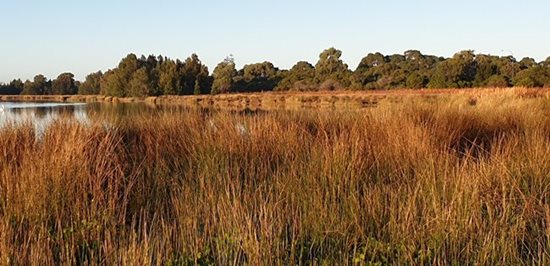 A total of 229 native flora species (78%) and 66 introduced weed species (22%) were recorded across the reserves within City of Rockingham. The species identified within the reserve represented 63 families with the Fabaceae (26 taxa), Poaceae (18 taxa), Asteraceae (15 taxa) and Orchidaceae (14 taxa) families having the most representation. The comprehensive list of plants recorded during the field surveys can be found in our Bushland Management Plan.
Sedgelands are a type of wetlands that are reliant on permanent moisture for survival. They are particularly important for protection as they are a threatened ecological community. These special wetlands only situate within linear dips between sand dunes. The wetlands provide insight into the evolutionary record of sea level history and climatic changes.
Typical plant species include:
Read more in the Lake Richmond Management Plan.
 Overview
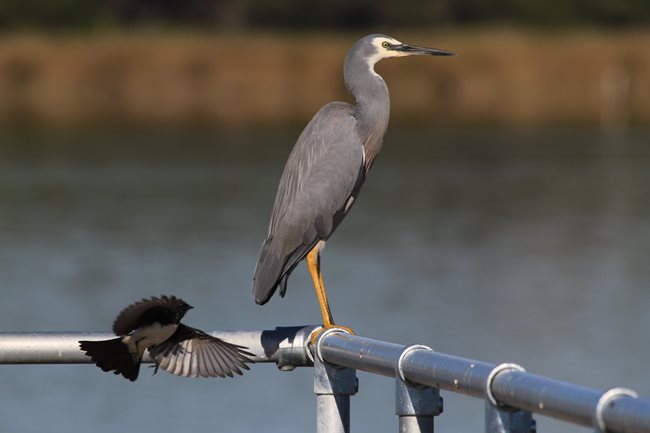
A total of 80 species from 42 families and 71 genera were recorded during the Level 2 Fauna Assessment undertaken in October 2018. This consisted of two amphibian species, 46 bird species, 14 mammal species and 18 reptile species.
A full list of the species recorded within each reserve and across the entire studt area is available in Bushland Management Plan.
Go to our wildlife page to learn more about local fauna.
Frogs are known to be good environmental indicators, and as such, were identified by the City to be monitored for the long-term effects of climate change. A baseline assessment of 15 wetlands was initially conducted in 2014 to determine the frog species assemblage within the City.
Call recording results captured a total of five frog species including C. insignifera (squelching froglet), C. glauerti (clicking frog), L. adelaidensis (slender tree frog), L. moorei (motorbike frog) and L. dorsalis (western banjo frog).
The most common species of frog was the target species, C. insignifera (squelching froglet) with detections at 39 sites and the most species-diverse site was Lake Richmond with five species recorded from each site. Occupancy rates at seasonal wetlands during 2023 was the highest yet recorded.
Positive results recorded in 2023 indicate that wetlands are currently responding well to potential climate change impacts and as such, no management response was triggered for 2024.
Our Bushland Management Plan identifies the conservation significant fauna to include:
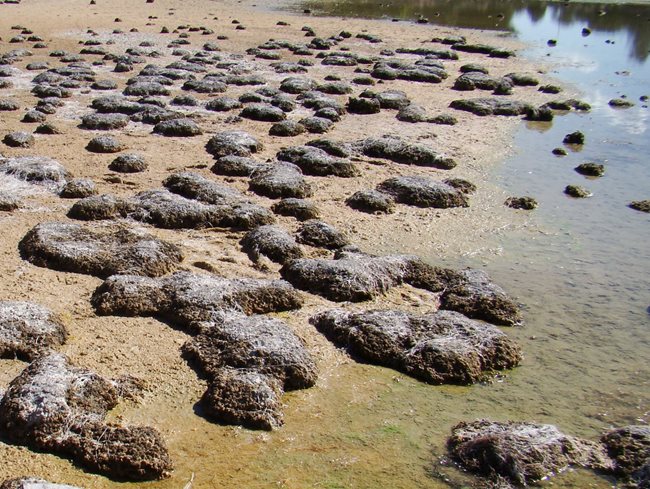 Lake Richmond is home to a critically endangered thrombolite community.
Communities of this nature were the main life forms on Earth in the period between 3,500 and 650 million years ago and were among the first creatures to produce oxygen. Today, thrombolites are found in just a few places around the world such as Lake Richmond!
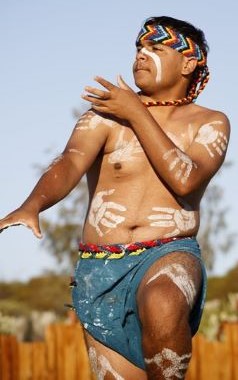
City of Rockingham is situated within Nyoongar Country. Nyoongar Country is an area that holds special significance to its traditional owners with many sacred sites occurring within the region. With the sites being of ceremonial and mythological significance for the Nyuungar people, it is believed that the Waugal, which represents the life and spirit of water, created water bodies surrounded by dune systems through its movement across the lands.
Identified registered sites of significance can be found on Aboriginal Heritage Inquiry System.
Perth NRM’s Adopt A Beach Program offers fun, hands-on, and curriculum-linked activities that help students conserve and learn about the marine and coastal environment. Adopt A Beach delivers a wide range of incursions and excursions suitable for all primary and secondary students in the Perth metro area.
From beach clean ups to coastal erosion case studies, there is something for every class.
City of Rockingham schools can access this program for free as part of our partnership with Perth NRM.
With 37 km of pristine coastline providing a home to incredible biodiversity, understanding and appreciating our oceans and coasts is crucial in maintaining a healthy planet. The program helps students connect to nature by using our amazing local beaches as outdoor classrooms. Here (and in the classroom), fun and hands-on activities are delivered that educate students on the importance of our marine and coastal environments, the impact of human activities and the significance of sustainable behaviours and practices. By instilling this appreciation and knowledge, we hope to build a generation committed to caring for our coasts and creating a sustainable future.
Learn moreopens in a new windowopens in a new windowopens in a new window
All program enquiries to address to:
Nora Larry
Adopt A Beach Program Coordinator
nora.larry@perthnrm.com
Take positive action against littering by "adopting-a-spot" through the Keep Australia Beautiful Council. Maybe it's your favourite reserve, a walkway to school, or a local park; the Adopt-a-Spot program is easy and a great way to make a positive change towards a safer future, with free clean-up items provided.
